
-

Why Do LLMs Work So Well When They Don’t Actually “Understand” Anything?
I get how LLMs and inference work. The mechanics aren’t the mystery. What keeps nagging at me — and what I think more people in business and tech should be asking — is why it works as well as it does given there’s so little semantic understanding of what’s actually being communicated. These models are doing next-token prediction. Statistical pattern matching over sequences. And yet they produce outputs that behave as if…
-

From the Trenches: Taming Legacy Beasts with AI
So, what differentiates this specialized approach? It’s the shift from general-purpose knowledge to domain-specific expertise. An off-the-shelf LLM is like a tourist with a phrasebook—it can ask where the library is, but it can’t understand poetry. A specialized model, however, becomes a digital native of the technology it’s working with.
-

Beyond Big Data: Why Your Company’s Future Depends on Curated AI Memory
For the last decade, we’ve been told that data is the new oil. That’s no longer true. Raw, unrefined data is quickly becoming a low-value commodity, and our companies are drowning in it. We’re paying to store petabytes of information that, like crude oil, is useless without a sophisticated refining process. The real value isn’t in having the data, but in what your organization remembers. As we enter the age of agentic…
-

You Can’t Optimize What You Can’t See: Solving the Global Supplier Visibility Problem with Knowledge Graphs
In today’s globally distributed enterprises, procurement and operations leaders are under pressure to reduce cost, increase compliance, and build resilient supplier relationships. But many of these same organizations are flying blind lacking a unified view of their vendor landscape. Why? Because their data systems don’t reflect how their vendors are actually structured in the real world. Consider this common scenario: your subsidiaries in Germany, the U.S., and Vietnam each purchase from a…
-
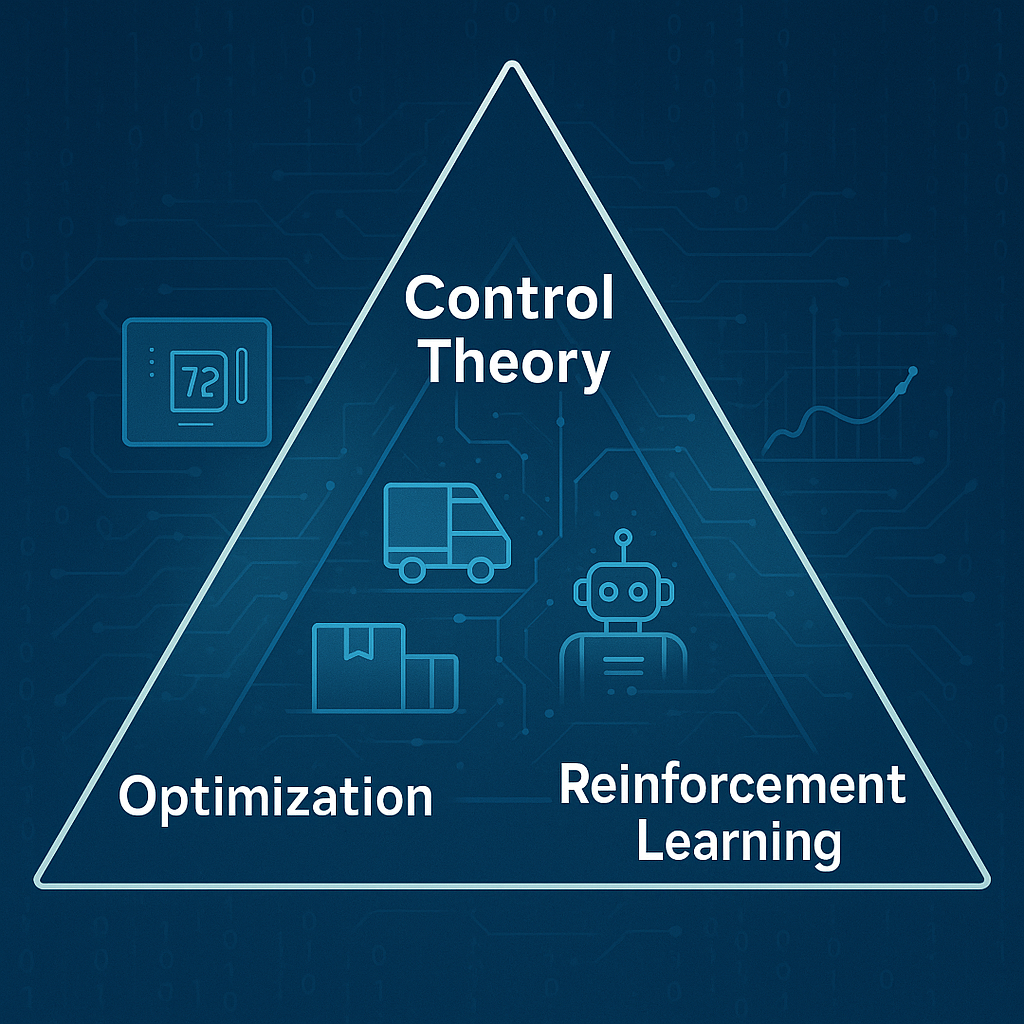
3 Mathematical Fundamentals to Supercharge Your Use of AI in Supply Chain Management
While everyone’s talking about ChatGPT and generative AI, the real revolution in supply chain management is happening through three mathematical principles that most executives have never heard of. These aren’t abstract academic concepts. They’re the secret weapons that separate supply chain leaders from followers in the age of AI. The truth is, general-purpose AI tools like large language models are impressive, but they fall short when it comes to the complex, dynamic…
-
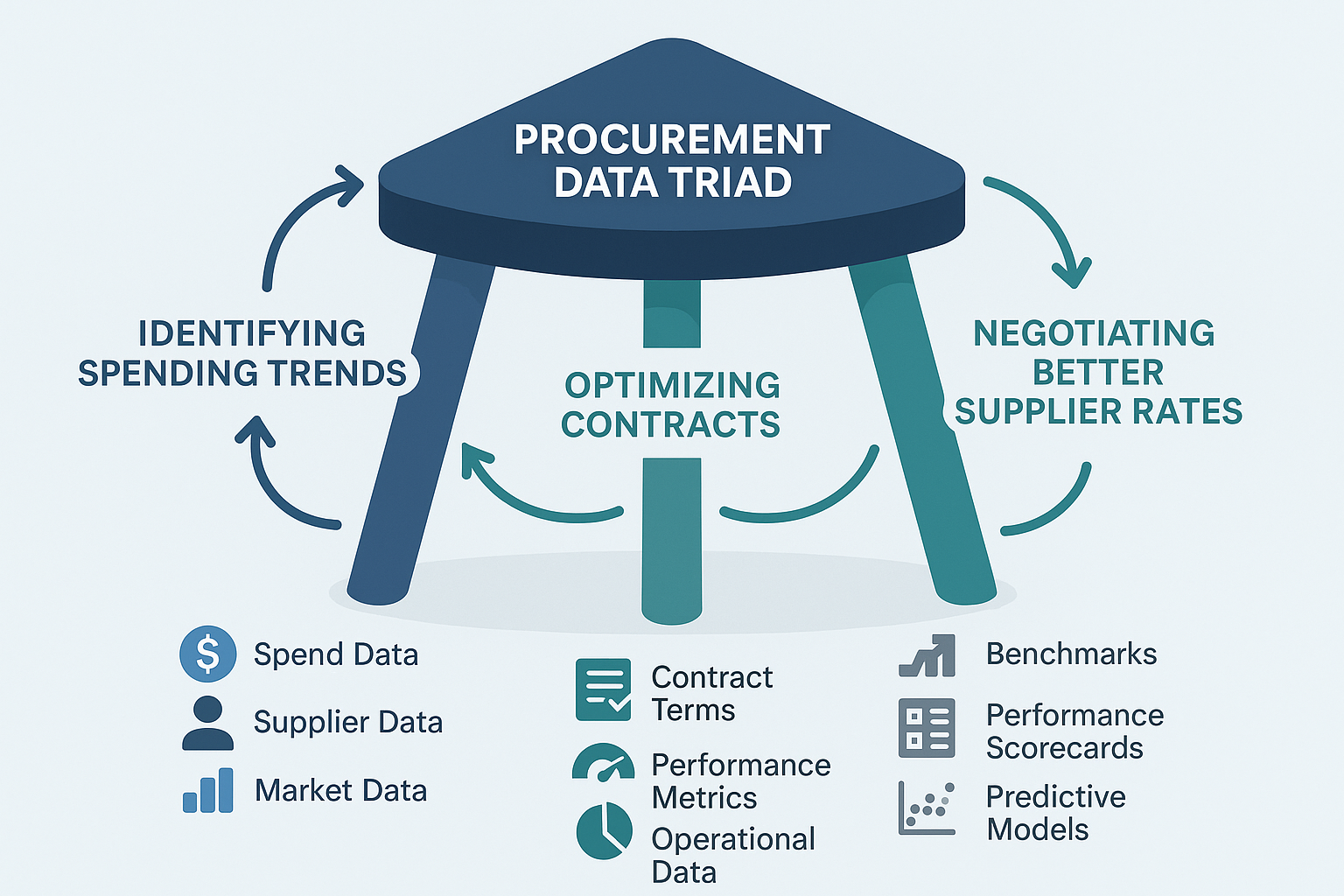
The Data-Driven Procurement Triad: How AI Transforms Information into Strategic Advantage
“In God we trust. All others must bring data.”— W. Edwards Deming The modern procurement function stands at a crossroads. No longer merely a transactional entity focused on purchasing goods at the lowest possible price, procurement has evolved into a strategic powerhouse capable of driving enterprise-wide value. This evolution, however, depends entirely on one critical foundation: data. But not just any data, the right data, properly structured, analyzed, and deployed against specific…
-

Strategic Questions for Executive Leadership: Gauging Your Organization’s AI Data Readiness
To ensure your organization is effectively leveraging modern data management practices and is poised to capitalize on advancements like Generative AI, it’s crucial to foster a dialogue with your technology and data leaders. Here are key questions the CEO and COO should consider asking the CIO and CDO: Understanding Our Current Data Capabilities & Strategy: Paving the Way for AI and Predictive Analytics: Governance, Talent, and Future-Proofing: These questions are designed to…